Let me share two stories.
The first is about Sunset, a young woman from an underrepresented community who was raised by a single mother and whom we sponsored into our Academy three years ago. She earned a full four-year, $250,000 scholarship to Rutgers University, and is starting this month September 2026. She credits much of her success to her chess experience with us. We taught her that failure is not only acceptable—it is necessary for winning. The sooner you fail, the sooner you can learn from it and grow. As salutatorian of her school, Sunset thanked me and the Academy in her speech for teaching her that lesson. She told her classmates she could not wait to see them fail—not as an insult, but as an invitation to learn, improve, and succeed. Hearing her express our mission so clearly was one of the most meaningful moments of my life.
The second story is about Franklin, who joined us almost ten years ago as a shy, socially awkward student who simply wanted to improve. He had outgrown his former chess school and was looking for a greater challenge. Our Academy changed his life. Today, he teaches for us and has helped hundreds of students understand that chess is more than a game—it is a life lesson, a path to confidence, and a way to connect with people they might never have met otherwise. Franklin also earned a full chess scholarship to Sacred Heart University in Connecticut; he too is starting there this month September 2026 where he will be paid to teach chess and serve as the top player on campus. He is close to becoming a master. To us, he is a premier student and a living example of the power of Future Masters Chess Academy. If you ask Franklin what the Academy means to him, he will answer with one word: everything. He also says that when Lawyer Times is gone, he will take over Future Masters Chess Academy and continue its mission. I laugh when he says it, but I cannot fully express how much that means to me and to our Academy.
The year was 2017, and I was trying to name our company. What should it be called? Should the name include a chess piece? No—our school would represent far more than any single piece could capture. Should it include my name, Lawyer Times? It would be unique, but the mission was bigger than me. A fellow master once told me that whatever name I chose needed to include the word “master.” He was right. A chess master is among the top 1% of rated players in the world, and among an even smaller fraction of all chess players. The word carries weight. Everyone respects a master. In many cultures, including Indian culture, the relationship between student and master is deeply meaningful and sacred. That mattered to me, especially because chess began in India and India is now at the forefront of global chess. But the respect for mastery extends far beyond one country or culture. Across the world—and especially across Asia—the title of chess master commands admiration. So we had one word: master.
But we could not simply call ourselves “Masters.” Golf already owns that. If you search for “The Masters,” everyone knows what comes up. My hope is that one day, searching for “The Masters” will also bring up an elite chess tournament—or even our Academy. I asked my business coach, Micah Logan, to help me find the right name. Micah is an acclaimed writer for Forbes and the author of The Brown Box; a book I believe will stand alongside Michael Gerber’s The E-Myth as an essential guide for helping businesses understand why they fail and how to turn things around. The Brown Box lays out ten practical turnaround steps for fixing a struggling business before it breaks you. And it was Micah—my friend and the book’s author—who first said the words “Future Masters” in early 2017. It was a revelation. The phrase hit me in the best possible way: two words that captured everything we wanted to build. I imagined hundreds of students becoming strong chess players, maybe even masters. But more important, I imagined them becoming masters in life—young people who would transform their futures because they became part of our community.
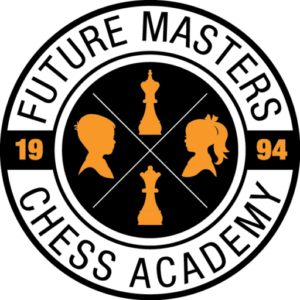
Still, we could not stop at “Future Masters,” because golf had a claim to that phrase too—at least it used to. Today, we appear on the first page as well. We needed to add “chess.” But would we-be a school, club, society, fellowship, hub, league, network, or lounge? Then it came to us: an Academy. Future Masters Chess Academy. FMCA it rhymes with YMCA. It had rhythm. It captured my imagination. This would not be an ordinary chess school or club. It would aim higher. It would be an academy devoted to chess and to developing better citizens through this royal game. When our designer created the logo, it brought tears to my eyes: a boy and a girl in graduation caps, the king and queen—the two most important pieces on the chessboard—the year 1994, when I became a master, and our name, Future Masters Chess Academy, all enclosed in a circle. It captured everything.
In 2018, we formed our LLC. As we enter our tenth school year in 2027, what a journey it has been. We have now impacted thousands of students ages 3 to 18. We have become a favorite after-school program in many school districts and have earned support from notable partners, including Jaylen Brown, Jrue and Lauren Holiday, Harvard, MIT, Suffolk University, and Duolingo. Duolingo is already giving Chess.com serious competition, with 7 million daily active users compared with Chess.com’s 9 million—despite Chess.com’s 20-year head start. And that is fine. The chess world is big enough for all of us if we open our eyes. That is what Future Masters Chess Academy does: we open eyes and minds. We helped Duolingo see a strategic opportunity in chess that they had not fully considered. Most chess players today are rated under 1000, and many are scholastic players. When I was growing up in the 1970s and 1980s, fewer than 10% of tournament players were children. Today, children make up the clear majority. I can look across the top section of a tournament and sometimes count only five players near my age among 30 competitors. Children are also starting earlier than ever. Some begin at age three and are beating their parents at age five. At some of our unrated tournaments, hundreds of children try to register, and so far, we have been able to accommodate only about half of them—but we are working on it.
Chess must attract the new player. That is where the future is. When I shared this insight with Duolingo, they recognized the opportunity. The most important player in chess today is not the chess addict—we already have that player. It is the new player. Chess is now Duolingo’s fastest-growing subject in its first year, and users spend more time playing chess on the platform than on any other language or subject. Chess sparks learning curiosity, and that is exactly what I envisioned when I founded Future Masters Chess Academy: to make chess the most impactful activity among school-age children in America. But first, we had to build a winning community here in Massachusetts.
We began in the school system in Lexington, one of the most affluent communities in Greater Boston and in the country. We taught at all of their elementary schools. Then we met a parent, Mr. Mosaliganti, and his son Shouri, who was only seven and already showing exceptional chess talent. We had a simple way to bring chess into schools: one of our young players would take out a chessboard during lunch. Shouri did this, and before long, 20 students were gathered around him. We identified the strongest four, brought them into our nearby Academy, and coached them at the Joseph Estabrook Elementary School in Lexington MA. In 2019, we helped them become the Elementary State Champions for the first time in that school history. We repeated that process and helped create more state champions from other Lexington schools, including Lexington High School.
We had found the formula. We also created a youth coach program after noticing that many students stopped playing chess during their teenage years. Through coaching, these young people stayed connected to the game and to our mission. They wanted to give back to younger students and help them experience the confidence, self-discipline, focus, and stronger decision-making that our Academy had given them. Today, hundreds of youth coaches are part of our Academy. We also sponsor the Massachusetts High School League, which brings together about 100 students each year—not only to compete, but to build friendships.
Our achievements are remarkable. More than 100 of our students have been ranked among the top players in Massachusetts for their age. More than 50 have ranked among the best in the country for their age. Ten have reached international status in their age groups, including one world champion.
We started this blog with more details of 2 of our remarkable students. The greatest source of pride is not the trophies or rankings; it is the impact we have had on these students’ lives.
We have hundreds of meaningful stories, more details to come in my first book, and that is why we created Future Masters Chess Academy: to make a lasting difference in the lives of young people. We believe that “if you can think, you can do anything.” That’s our number one saying.
One of the greatest needs among young people today is stronger thinking—better focus, more confidence, and wiser decision-making.
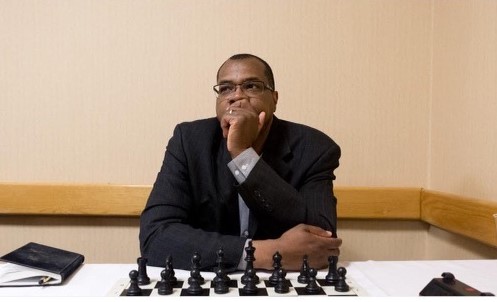
Chess changed my life. In 2017, when I became the first Black State Champion of Massachusetts in roughly 100 years, I realized it was time to do something big—to impact the lives of thousands, and hopefully millions, of children who like me when I was a child struggled with social connections and shyness.
Now let me take you one year earlier. It was the winter of 2016. I received a call that would forever change my life. It was a man who lived in Burlington, the next town over from Lexington. It was here in the town of Burlington that our Academy would create its foundation center. He said I have 5 kids, and I teach them and other kids about the stock market and chess at a center near my house here in Burlington MA. But he said they are getting too good at chess and so he searched to find a Black chess master in Massachusetts to help run the program. I was not hard to find. I was and still am the only one. This man Mr. Kas is a phenomenal man from Congo. He was the one that helped us get started in an area that is now the best producer of chess talent in Massachusetts.
We had 20 students in two months’ time. Half were girls and half were boys. That was remarkable because girls historically make up much less than 10% of chess players. Within 8 months we had 40 students. This equaled some programs that had been at the center from its conception in 2013. That is if they survived. Many did not. Mr. Chang, an owner of New England Movement Arts, an 18,000 square foot amazing space in Burlington MA, believed in the art of chess right away. He felt it was a higher art like ballet. We need more owners of huge facilities like him to get behind our chess movement. He saw that to complete his mission he needed to have an activity that not only moved the body but now the mind. And so Future Masters Chess Academy began. We are still there, impacting many young lives 10 years later.
Then in the winter of 2021 I got another call that would bring us to new heights. A father, Mr. Arun, of a 4-year-old helped us get space in Ashland MA. The 4-year-old is now a world champion for his age. Three years later we made enough progress to get our own amazing, leased space of 2000 sq ft with amazing chess displays in Ashland MA. It’s an amazing journey for an extremely shy child who stuttered. Today, I can speak to thousands of people at once without fear holding me back. Join us. Come visit us. We now have the 2,000-square-foot chess palace which is our base at 200 Homer Ave Ashland, MA, 01721 And we still operate at the New England Movement Arts Center at 123 Muller Rd. Burlington MA 01803. We retain students like no other academy.
And now it is time to say goodbye to Jaylen Brown as he leaves Boston for Philadelphia—their gain, our loss. His life changed in eighth grade when he began playing chess and using retroactive thinking: first identifying where he wanted to be, then determining what it would take to get there. He is one of the most brilliant minds in the NBA, and much of that began with chess and the right mentors. Thank you, Jaylen, for your support. Because of it, we are helping hundreds of underrepresented children, in some of the poorest communities, stand tall and achieve what previous generations only hoped for like Sunset who we started this blog with her story.
So now you know what Future Masters Chess Academy is. It is the premier chess academy in Massachusetts for winning on and off the chessboard. And now you know why we do it.
Because “if you can think, you can do anything.”
Now get out there and think!